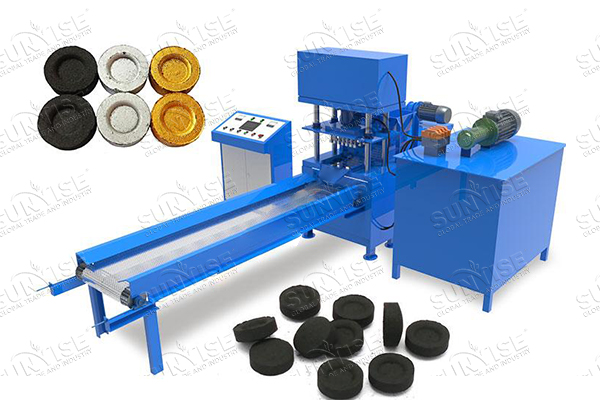
Rice husk is the protective coat around rice seeds. It is a waste material that is obtained in tons during the rice harvesting season. And the most abundant components present in rice husk are cellulose, lignin, and silica. Due to the high percentage of lignin (natural binding material) and low water content, rice husk is a valuable raw material to make charcoal briquettes for household or industrial uses. Par šo, on 15th June 2024, a customer from Japan wanted to purchase a set of rice husk charcoal briquette machine. Šajā gadījumā ir īpaša informācija par komunikāciju:
Virsotne 2 rice husk charcoal briquette making method
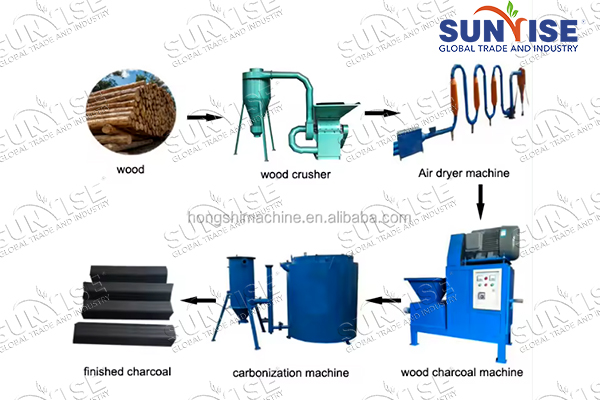
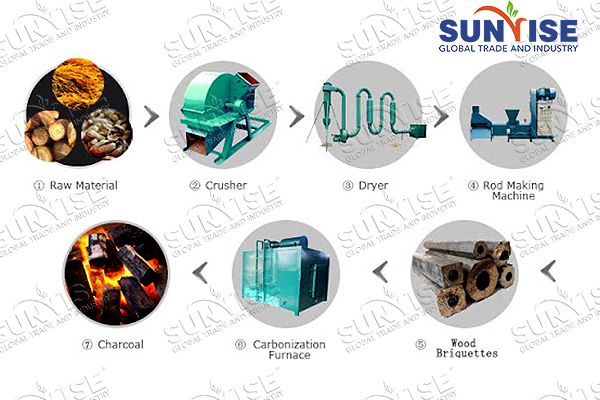
Šis japāņu klients vēlējās uzzināt rīsu mizu bioogles briketes pagatavošanas metodi. Vispār, tur ir divi ogļu briketes pagatavošanas veidi no rīsu mizas. Viens no tiem ir tieša rīsu mizas karbonizācija oglē caur karbonizācijas krāsni, un pēc tam rīsu mizas ogles saspiežot briketēs. Otrs veids ir rīsu mizas vispirms saspiest briketēs, izmantojot rīsu mizu brikešu mašīnu, tad karbonizē rīsu mizu briketes oglēs.
Carbonization first & then forming
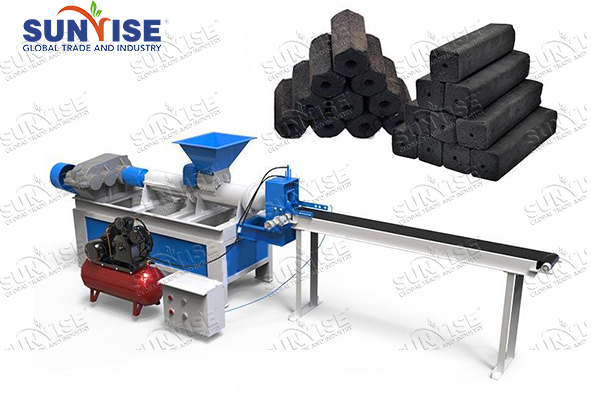
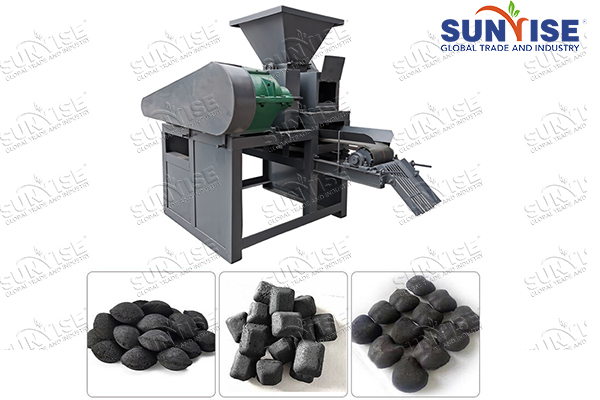
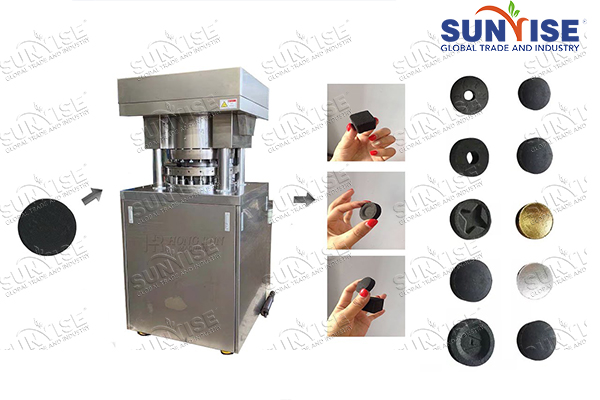
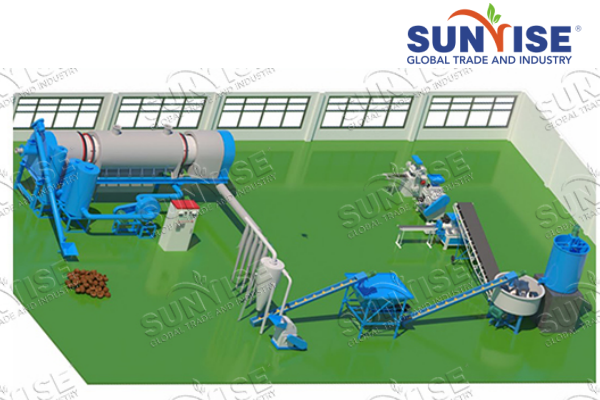
This method is suitable for customers with sufficient budget. Because rice husks are very small and the only carbonizer suitable for this feed size is a Nepārtraukta karbonizācijas krāsns – 5-20 mm. Parasti, rice husk as a fine particle material does not need to be further crushed, you can feed it directly. Pēc tam, you can use charcoal wheel grinder to make charcoal powder. Beidzot, there are four kokogļu brikešu ražošanas mašīnas for your choice to produce rice husk biochar briquettes.
Vispirms veidojas & tad karbonizācija
Līdz mitruma saturs rīsu mizā ir līdz 15%. Lai arī, ir ierosināts, ka izejmateriālam vajadzētu būt 8% uz 10% mitrums tajā. Tāpēc jums ir nepieciešams žāvētājs, lai samazinātu mitruma saturu. Un lai samazinātu rīsu mizu briketēšanas izmaksas, to var arī novietot zem saules gaismas, lai samazinātu mitruma saturu, iztvaikojot. Tā kā rīsu miziņa ir maza izmēra, tāpēc nav nepieciešams sasmalcināt. Pēc žāvēšanas, jūs varat to tieši ievadīt kokogļu ekstrūdera mašīna. Beidzot, izmantojot Karbonizācijas mašīnas pacelšana vai partijas tipa karbonizācijas krāsns, var dabūt rīsu mizu bioogles briketes.
What is the price of rice husk charcoal briquette plant?
Then the customer from Japan also wanted to know the price of rice husk biochar briquette plant. And the cost of rice husk charcoal briquette production usually varies according to capacity, equipment configuration and many other factors. Here we will show you the prices of 500-1000 kg/h small scale rice husk charcoal briquette production line, 1-10 t/h rice husk biochar briquette making line and 10-30 t/h large scale rice husk charcoal briquette manufacturing system for your reference.
500-1000 kg/h
- 600-1050㎡
- (Reference)
1-10 t/h
- 1250-3000㎡
- (Reference)
10-30 t/h
- 3000-4000㎡
- (Reference)
Is there a lower investment rice husk charcoal briquette making plan?
Protams. The above is the price of the highest configuration business plan machines. Papildus, we can offer you two basic designs. Piemēram, for one basic carbonization furnace + kokogļu riteņu dzirnaviņa + charcoal briquette maker, you only need to prepare $5,000-$23,000 (carbonization first & then forming method). As for another design, with charcoal extruder + hoisting or partijas tipa karbonizācijas krāsns (forming first & then carbonization method). Pret $ 8,000-$23,000.
What is the use of rice husk charcoal briquette from Sunrise machine produced?
Beidzot, Japanese client prepare to get more profits from these rice husk biochar briquettes. So he asked us the use of rice husk charcoal briquette. In addition to being used as fuel, rice husk charcoal briquette is also widely used in industry and agriculture.
Rice husk charcoal briquette production line is an ideal choice for beginners production. But if you want to produce small scale rice husk biochar briquette, you can choose our small scale rice husk charcoal briquette production plan.