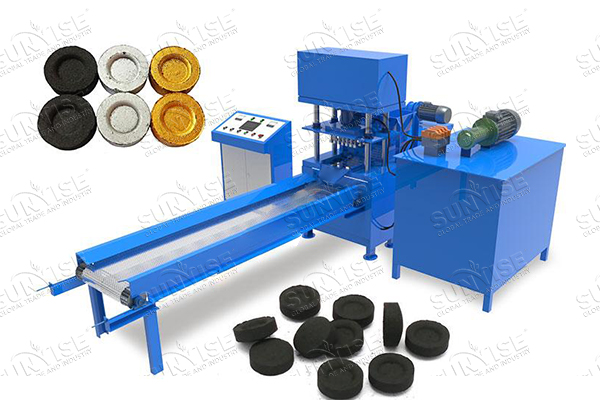
Rice husk is the protective coat around rice seeds. It is a waste material that is obtained in tons during the rice harvesting season. And the most abundant components present in rice husk are cellulose, lignin, and silica. Due to the high percentage of lignin (natural binding material) and low water content, rice husk is a valuable raw material to make charcoal briquettes for household or industrial uses. For dette, on 15th June 2024, a customer from Japan wanted to purchase a set of rice husk charcoal briquette machine. Følgende er de spesifikke detaljene for kommunikasjon i denne saken:
Topp 2 rice husk charcoal briquette making method
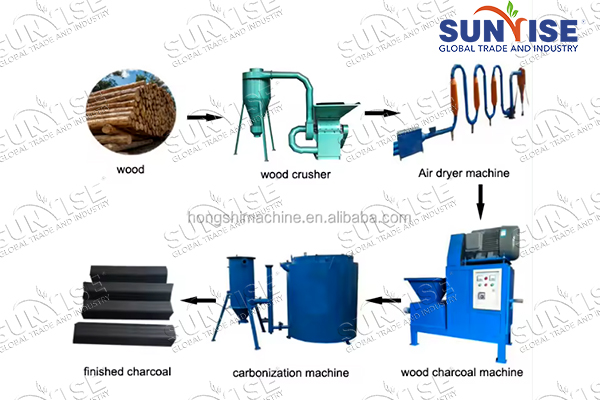
Denne japanske kunden ønsket å vite metoden for å lage risskall biokullbrikett. Generelt, det er to måter å lage kullbrikett på fra risskall. Den ene karboniserer risskall direkte til trekull gjennom en karboniseringsovn, og deretter komprimere risskalkullet til briketter. Den andre er å komprimere risskallet til briketter først ved hjelp av risskallbrikettmaskinen, karboniser deretter rishusbrikettene til kull.
Carbonization first & then forming
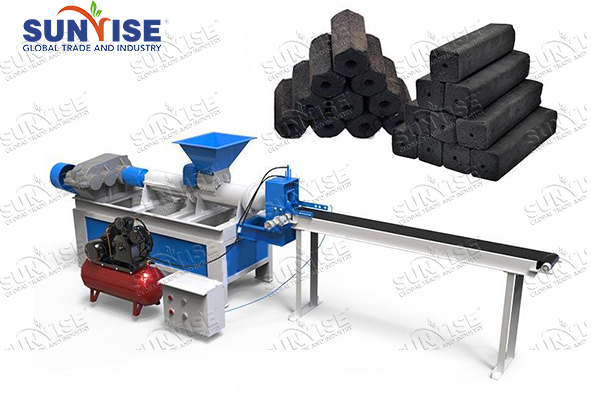
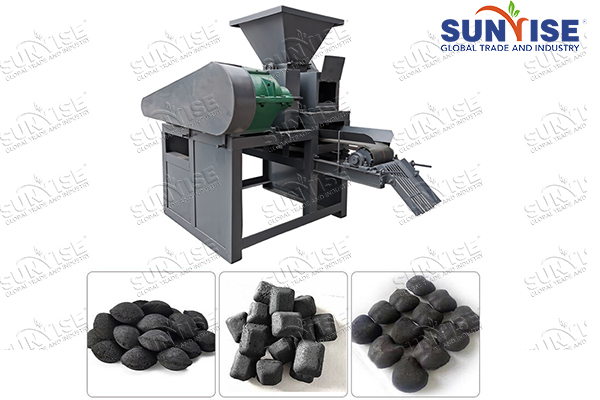
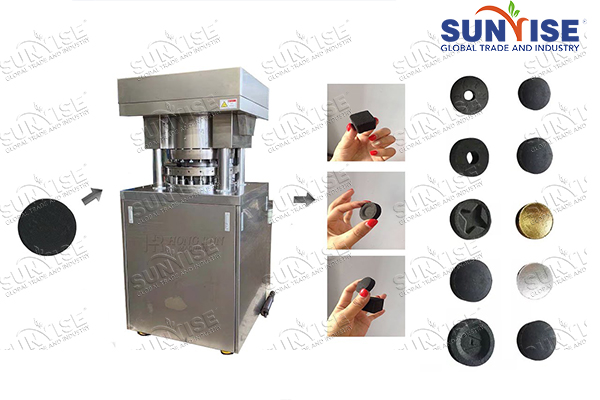
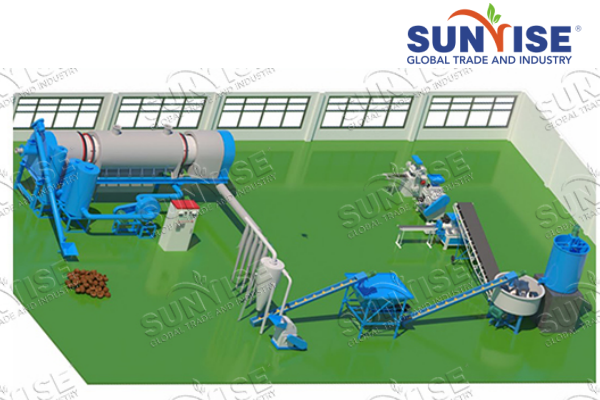
This method is suitable for customers with sufficient budget. Because rice husks are very small and the only carbonizer suitable for this feed size is a continuous carbonization furnace – 5-20 mm. Vanligvis, rice husk as a fine particle material does not need to be further crushed, you can feed it directly. Etter det, you can use charcoal wheel grinder to make charcoal powder. Endelig, there are four Charcoal Briquette Making Machines for your choice to produce rice husk biochar briquettes.
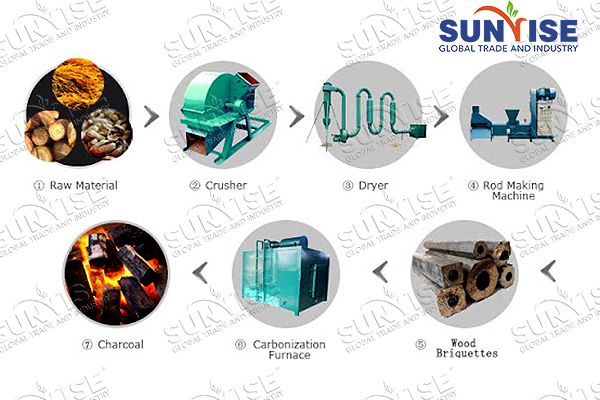
Forming først & deretter karbonisering
De Fuktighetsinnhold i risskallet er opp til 15%. Imidlertid, det foreslås at råvaren skal ha 8% til 10% fuktighet i den. Så du trenger en tørketrommel for å redusere fuktighetsinnholdet. Og for å redusere kostnadene ved brikettering av risskall, den kan også plasseres under sollys for å redusere fuktighetsinnholdet gjennom fordampning. Siden risskallet er lite i størrelse, så det er ingen behov for knusing. Etter tørking, du kan mate den direkte inn Kullemaskinmaskin. Endelig, gjennom å bruke heise karboniseringsmaskin eller karboniseringsovn av batchtype, du kan få risskall biokullbrikett.
What is the price of rice husk charcoal briquette plant?
Then the customer from Japan also wanted to know the price of rice husk biochar briquette plant. And the cost of rice husk charcoal briquette production usually varies according to capacity, equipment configuration and many other factors. Here we will show you the prices of 500-1000 kg/h small scale rice husk charcoal briquette production line, 1-10 t/h rice husk biochar briquette making line and 10-30 t/h large scale rice husk charcoal briquette manufacturing system for your reference.
500-1000 kg/t
- 600-1050㎡
- (Reference)
1-10 T/H.
- 1250-3000㎡
- (Reference)
10-30 T/H.
- 3000-4000㎡
- (Reference)
Is there a lower investment rice husk charcoal briquette making plan?
Selvfølgelig. The above is the price of the highest configuration business plan machines. I tillegg, we can offer you two basic designs. For example, for one basic carbonization furnace + Kullhjulsliper + Charcoal Briquette Maker, Du trenger bare å forberede deg $5,000-$23,000 (carbonization first & then forming method). As for another design, with charcoal extruder + hoisting or Batch type karboniseringsovn (forming first & then carbonization method). Om $ 8,000-$23,000.
What is the use of rice husk charcoal briquette from Sunrise machine produced?
Endelig, Japanese client prepare to get more profits from these rice husk biochar briquettes. So he asked us the use of rice husk charcoal briquette. In addition to being used as fuel, rice husk charcoal briquette is also widely used in industry and agriculture.
Rice husk charcoal briquette production line is an ideal choice for beginners production. But if you want to produce small scale rice husk biochar briquette, you can choose our small scale rice husk charcoal briquette production plan.